History and culture
Gulf and Arabic coffee culture
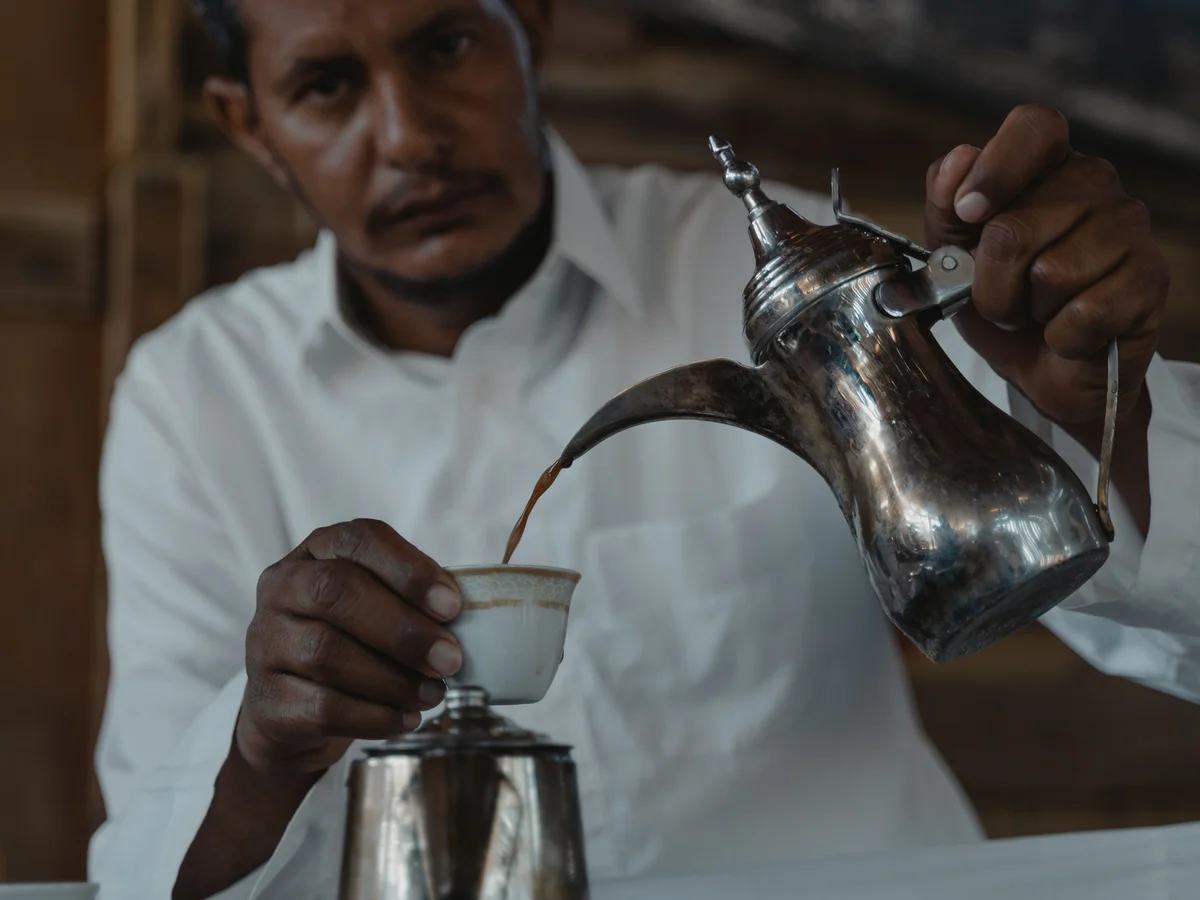
Arabic coffee (qahwa) — typically a light roast, unsweetened, often spiced with cardamom, and served in small handleless cups — is a central and living part of hospitality traditions across the Arabian Peninsula and wider Gulf region.
Each section below is labelled by how well-established its claims are — look for the label under each heading.
This page is a short reference entry. The full account of the subject is Gulf Arabic coffee (qahwa).
Preparation and serving customs
Documented history · Arabian Peninsula, wider Gulf region
Arabic coffee is documented as typically prepared from lightly roasted beans, often spiced with cardamom (and sometimes saffron or cloves), and served unsweetened in small handleless cups, frequently alongside dates. Hospitality customs around serving order, cup refills, and the host's role are a significant, living part of the tradition, not incidental detail.
Sources: Encyclopaedia Britannica coffee and coffeehouse history entries; The World Atlas of Coffee
Recognition as intangible cultural heritage
Documented history
Arabic coffee's role in hospitality has been recognised by UNESCO as an element of intangible cultural heritage, reflecting its documented social and ceremonial significance in the region — CoffeeHQ notes this as a marker of the tradition's documented cultural importance, not as a claim about the drink's taste or quality relative to others.
Sources: Encyclopaedia Britannica coffee and coffeehouse history entries; The World Atlas of Coffee; Representative List of the Intangible Cultural Heritage of Humanity
How to order this abroad
Preparation traditions
How this history is practised today, in CoffeeHQ's international preparation atlas.
Where it was drunk
The institutions this history runs through, in CoffeeHQ's coffeehouse-history layer.
- The Egyptian ahwa — The Egyptian street coffeehouse — plastic chairs on the pavement, backgammon, shisha and Turkish-style coffee — a neighbourhood institution that has outlasted every political order it has sat under, and which women have historically not been welcome in.