Skip to content
CoffeeHQ

Understand coffee, end to end.

From growing and processing to roasting, grinding and brewing — CoffeeHQ explains what happens at each stage, why methods differ, and how that changes what ends up in your cup.

drinks
28 drinks
brewing methods
12 brewing methods
guides
69 guides
fixes
47 fixes
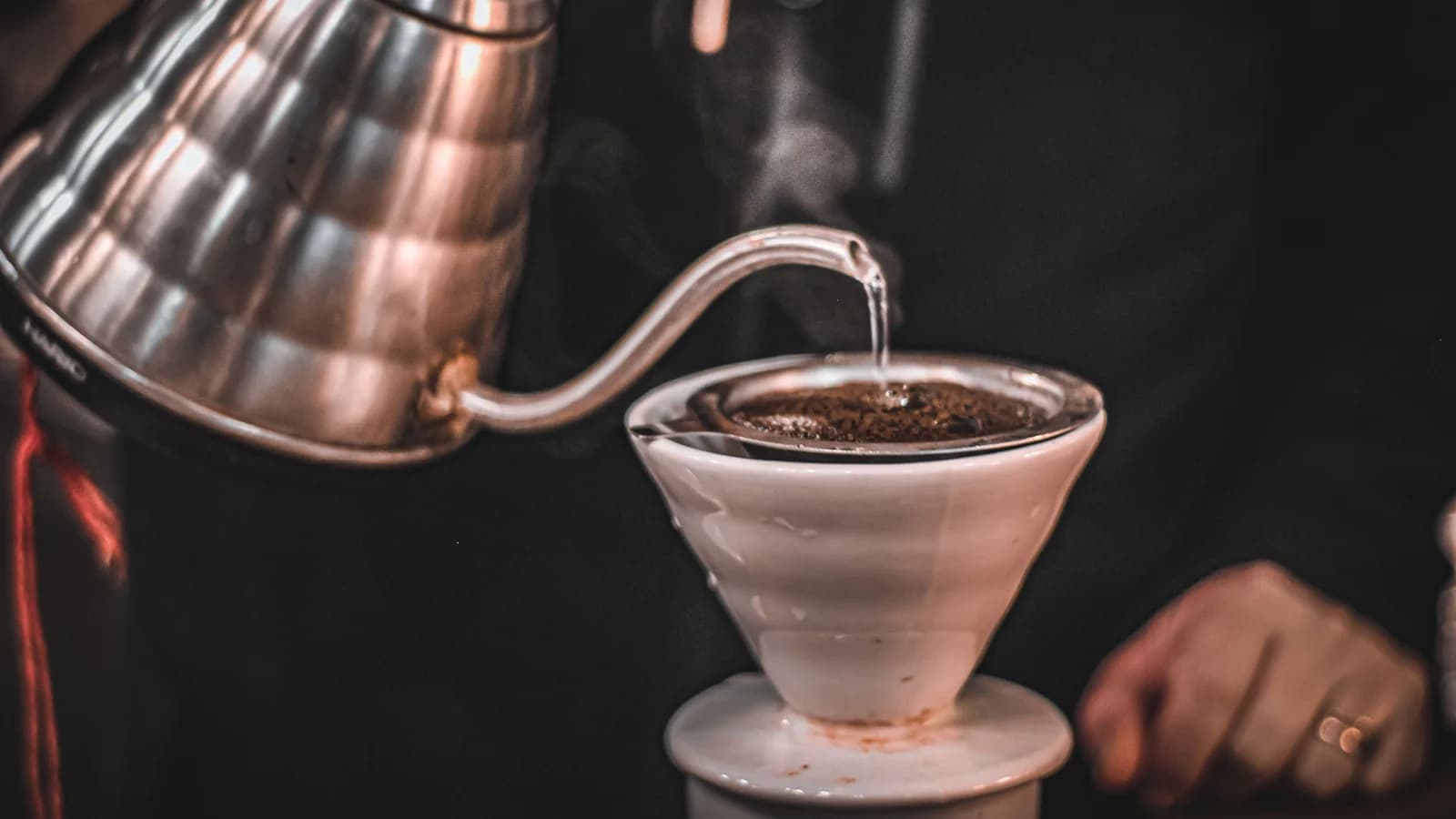
A gooseneck kettle pouring hot water over coffee grounds in a white ceramic cone dripper, steam rising.

Where to start

Start from where you are

Four routes, each in the order to take it: from the brewer you own, a shot that tastes wrong, a brewer you have not chosen yet, or wanting to learn it properly.

I have coffee and a brewer

You own something to brew with and want a good cup from it.

Find your brewer's page, start from its recipe, and change one thing at a time. The later steps are for when the cup is not right, and for finding out why a change worked.

  1. Find your brewerWhat it does to the coffee, and a starting recipe labelled as a starting point.
  2. Work out the amountsCoffee and water for the cup you are making; the recipe scaler follows from it.
  3. If the cup is not rightChoose the brewer, tick what you noticed: the quickest check, and one change.
  4. One change per brewThe same loop written out for filter coffee, from the first brew to a recipe you keep.
  5. Why the change worksStrength and extraction as two numbers, and what a taste can and cannot tell you.
  6. Test it yourselfHow to compare two cups so the difference is the thing you changed.
  7. See the variables togetherWhat each control moves, side by side, before you touch the next one.

My espresso tastes wrong

You have a machine and a grinder, and the shot is sour, bitter, thin or unpredictable.

Start from what you noticed and not from a rule. The order here is the order to rule things out in: the recipe, the puck, the grinder, the water, the coffee.

  1. Read the shotEvery espresso reading: what to check first, and the one thing to change.
  2. Dial in, one change per shotThe loop from a first shot to a recipe, with what to hold still each time.
  3. The puckDose, distribution and tamp in order, and how to tell which one moved.
  4. The grinderWhen it will not go fine enough, one step is too large, or yesterday's setting is off.
  5. The waterWhen every coffee tastes flat or sharp whatever you do to the recipe.
  6. The coffee itselfVery fresh, stale, or a roast that brews unlike the last one.
  7. Enter the shotDose, yield, time and taste in; ranked suggestions out, with what to watch next.
  8. Why the puck behaves as it doesWhat was measured about pressure, flow and channelling, and by whom.

I do not know what brewer to use

You have not chosen a brewer, or wonder whether a different one would suit you better.

Start from what you want in the cup and what you will put up with, not from a ranking. No method is ranked above another here; each one trades something for something.

  1. Start from what you wantEach want, the methods that lean towards it, and what it costs you.
  2. Set two or three side by sideBody, clarity, strength and the rest, with what each statement rests on.
  3. Read the method's own pageWhat the brewer does, and its starting recipe.
  4. What it is like to ownSize, cleaning, what else you need, and faults that come from the design.
  5. Work out the first brewAmounts for the starting recipe, at the size you are making.
  6. Then make it betterOnce you are brewing: by brewer, by what you noticed.

I want to learn coffee

You would sooner be taught in order than look things up one at a time.

Two programmes, one for the hands and one for the reasons, each level ending in something to do. The exercises and the Tasting Lab are where the reading turns into practice.

  1. Choose where to startWhich programme suits you, and the shorter paths by subject.
  2. Become a BaristaNine levels at the machine, each with tasks and a check for your own work.
  3. Become a Coffee ExpertFrom the plant to the cup, each level with a bridge from the science to a decision.
  4. ExercisesProtocols to run at home, each with what to record and what counts as no difference.
  5. Tasting Lab: how to practiseDescribe first, then say how much you liked it, and keep the two apart.
  6. Tasting Lab: thirteen ways to practiseSide by side, blind, triangle, and the rest, each pointing at its exercise.

Practical tools — no account needed

Go deeper

Explore

Drinks & brewing

Coffee & origin

Learn

Tools