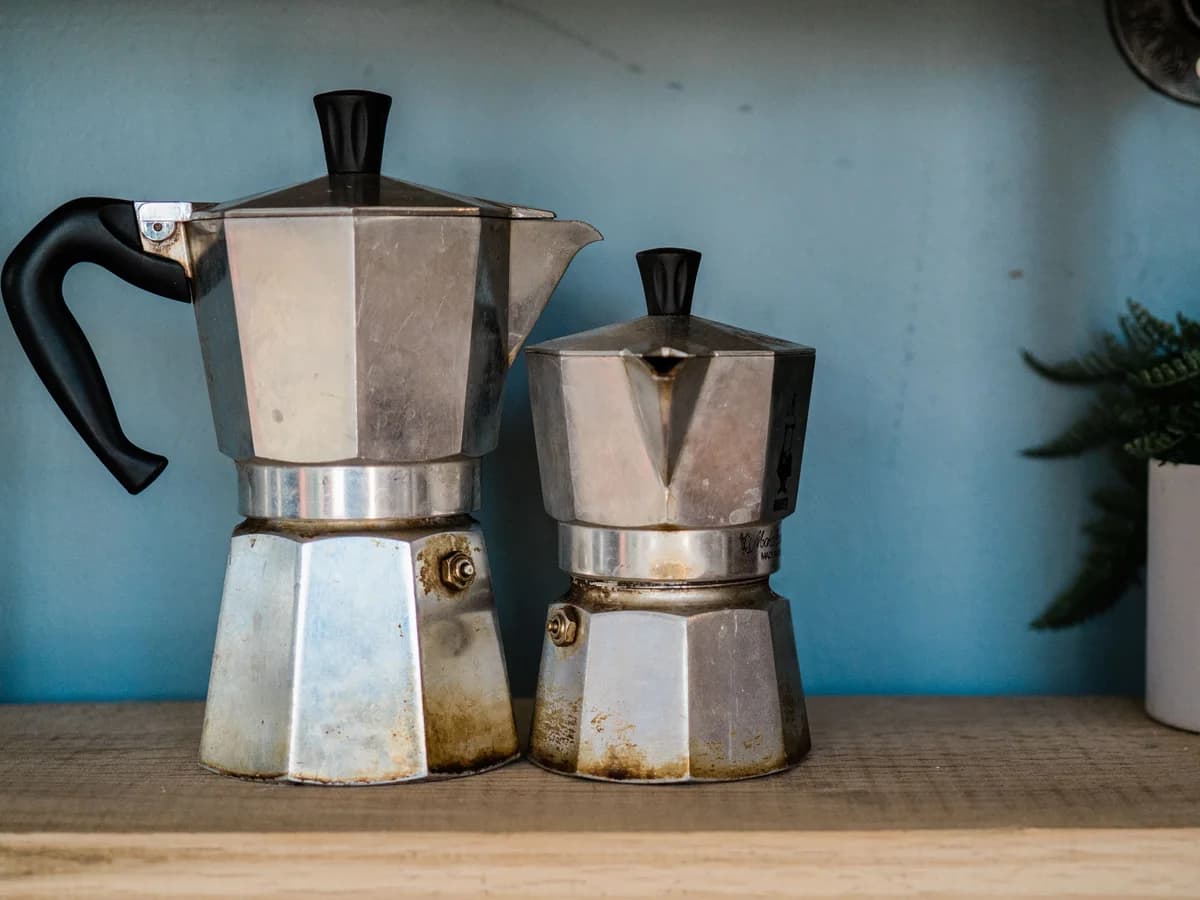
Coffee maker
Moka pot
A stovetop brewer using steam pressure to produce a strong, concentrated coffee often used as an affordable espresso substitute.
In short
A moka pot is three pieces of metal: a base that holds water, a funnel basket that holds coffee, and a top chamber that collects the brew. Heat builds steam pressure in the base, which pushes water up through the coffee. The result is strong and heavy-bodied, somewhere between filter coffee and espresso.
It is cheap, lasts for decades and has two parts that need occasional replacing. The decision that people most often get wrong is the size.
Why the size cannot be adjusted afterwards
Widely documented
A moka pot is designed to be used full: water up to the valve, basket filled level. The geometry assumes it. A half-filled basket lets water rush through loose coffee, and less water in the base changes when and how the brew comes up. In practice a pot makes one quantity well.
The sizes are counted in cups, and those are small, espresso-sized cups, not mugs. A pot labelled for three makes roughly one small mug of strong coffee. Buy the size for what you drink most days, and consider a second, smaller pot before buying one that is too big.
Aluminium, stainless steel and the hob you have
Widely documented
- Aluminium
- The traditional material: light, quick to heat and inexpensive. It discolours in a dishwasher and should be washed by hand. It does not work on an induction hob unless a steel adapter plate is used.
- Stainless steel
- Heavier and slower to heat, easier to keep bright, and usually dishwasher-tolerant, though the maker's guidance decides. Many, but not all, steel pots work on induction; check for that statement specifically.
- Electric models
- A base with its own heating element and an automatic cut-off. Useful where there is no hob, and they remove the risk of leaving a pot on the heat.
The valve that keeps it safe and the ring that keeps it sealed
Widely documented
The small valve on the side of the base releases pressure if the path through the coffee is blocked. It only works if it is clear and above the water line, which is why the base is filled to just below it and never over. Do not tamp the coffee and do not grind as fine as espresso, since both can block the flow the pot relies on.
Between the base and the top sits a rubber or silicone gasket with a metal filter plate. The gasket hardens with heat and age. When steam or water escapes at the join, or the pot will not build pressure, it needs replacing. The instructions for the best-known aluminium pot go further and recommend a new gasket at least once a year whether or not it looks worn. Gaskets and plates are sold by pot size and are specific to the maker's dimensions.
When the pot itself is the problem
CoffeeHQ explanation
- Steam or water leaks at the middle join
Usually because: The gasket is worn, or coffee grounds on the rim are stopping it sealing.
Change first: Wipe the rim clean before screwing together; replace the gasket if it still leaks.
- Little or no coffee comes up
Usually because: The grind is too fine or the coffee has been pressed down, blocking the flow.
Change first: Use a coarser grind and fill the basket level without pressing.
- The handle softens or scorches
Usually because: A gas flame wider than the base is licking up the side.
Change first: Use the smallest burner and keep the flame under the base.
- Harsh, burnt-tasting coffee
Usually because: The pot was left on the heat after the brew had come up.
Change first: Take it off the heat as soon as the stream turns pale and starts to sputter.
Care between brews
Widely documented
- Let the pot cool before unscrewing it. The base is under pressure while hot and the metal will burn.
- Grip the base and the top chamber to open and close it, not the handle. The handle is not made to take that twisting force.
- Rinse all three parts and the gasket with hot water after each use and remove the spent coffee from the basket.
- Dry the parts before reassembling, or store them unassembled, so moisture is not trapped in the base.
- Check from time to time that the safety valve moves freely and is not crusted with scale. On pots whose valve has a small piston, the maker's instructions say to move it along its axis while washing.
- Descale the base when a deposit shows. The same instructions describe running the pot once, without coffee, on water with a little citric acid or vinegar, then discarding that and washing it out.
On detergent, follow the instructions for your pot. The best-known maker of aluminium pots says to wash by hand with water only, with no detergent and no abrasive pad, and never in a dishwasher. Makers of stainless steel pots often allow more. Old coffee oil does go rancid, so whatever the method, a pot that smells stale has not been cleaned well enough.
What to do next
- How to brew with a moka pot — Heat, grind and timing for a sweeter, less bitter pot.
- Espresso machine vs moka pot — What the pot can and cannot do compared with real espresso.
- Make my coffee better — A guided route from what the pot is producing to one change to try.
- Become a barista — A structured programme from dose and grind through milk, drinks and maintenance.
How it works
Water in a lower chamber is heated until steam pressure forces it up through a puck of coffee into an upper collecting chamber.
Who it suits
- users wanting a strong, affordable, no-electricity brewer
- users who enjoy stovetop brewing
Who it may not suit
- users wanting true espresso pressure or crema
- users wanting precise temperature control
- Starting dose
- 18g
- Coffee-to-water ratio
- 90–110 g per litre (typically 100)
- Grind
- Medium-fine, finer than drip but coarser than espresso.
- Capacity
- 1-6 cups
- Brew time
- 4-6 min
- Skill level
- intermediate
- Noise
- quiet
- Space
- compact
- Cleaning burden
- low
- Convenience
- medium
- Manual control
- medium
Descriptive grind labels like this are illustrative starting points, not precise measurements — the same label can mean different particle sizes on different grinders. See the grind size guide for how to dial this in on your own equipment.
Uses the Moka pot brewing method.
Equipment
Advantages
- low cost, no electricity needed
- strong, concentrated result
- compact and durable
Disadvantages
- not true espresso pressure or crema
- can taste bitter or burnt if not attended carefully
Steps
- Fill the base chamber with water to just below the safety valve, never above it.
- Fill the funnel basket with coffee and level it. Do not tamp.
- Screw together firmly, not by the handle, and heat gently with the lid closed: on gas keep the flame within the base, on electric use a medium setting. Do not leave it unattended.
- Take it off the heat as soon as the coffee has finished coming through, and let the pot cool before opening it.
Cleaning & maintenance
Rinse all three parts and the gasket with hot water after each use. On detergent, follow your pot's instructions: the best-known maker of aluminium pots says water only, no detergent and never a dishwasher.
Replace the gasket when it hardens or leaks (one maker recommends yearly) and check that the safety valve moves freely.
Consumables: replacement gasket and filter plate (occasional)
Common faults
- bitter, burnt-tasting coffee from too much heat
- sputtering or leaking from the sides
Cost
Purchase cost band: budgetWidely available at a low price point across sizes.
No filters or pods needed — ongoing cost is only beans.
Suitable roast levels
Related guides
Not sure if this is right for you? Try the coffee-maker selector.