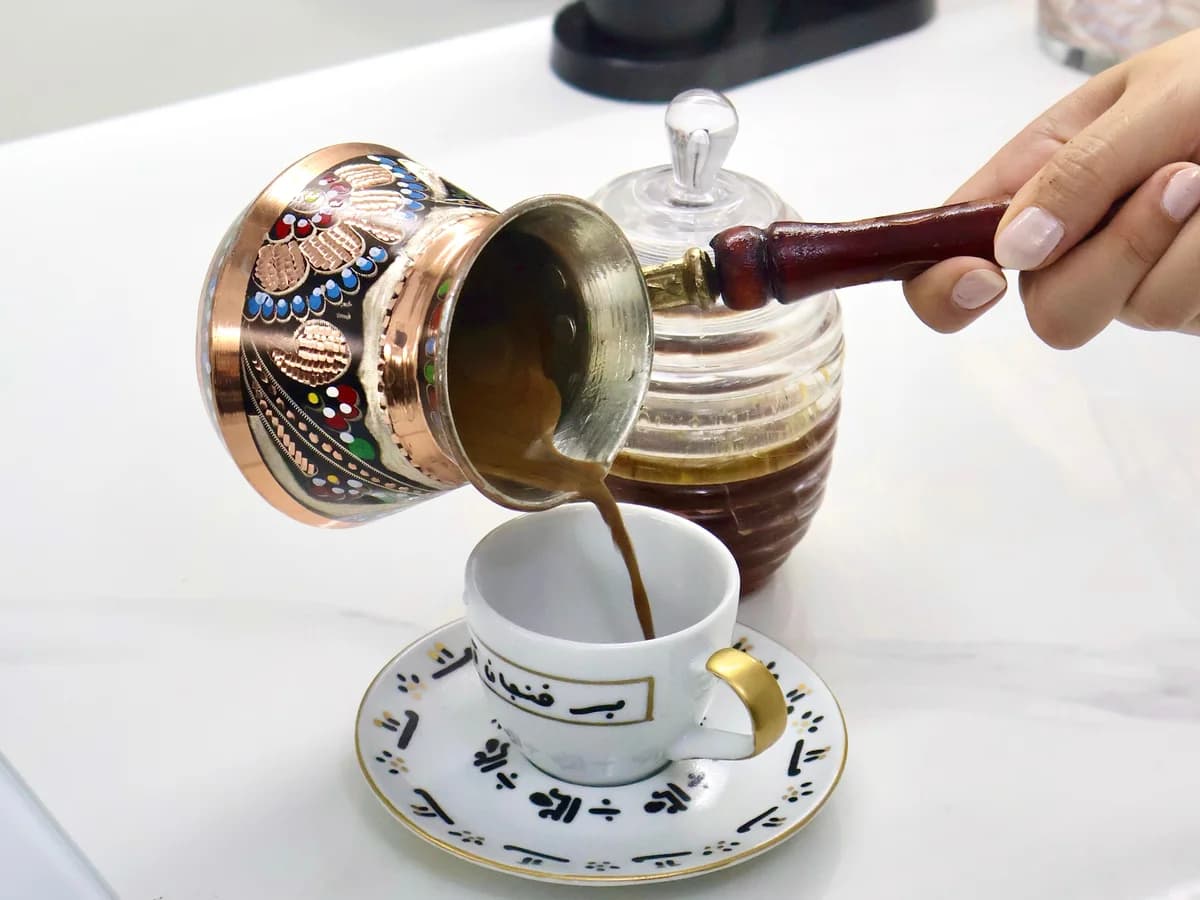
Coffee maker
Turkish cezve (ibrik)
A small, long-handled pot used to simmer extremely finely ground coffee, producing a strong, unfiltered traditional coffee.
In short
A cezve, also called an ibrik, is a small long-handled pot, wider at the base than at the neck. Very finely ground coffee is heated in it with water, and sometimes sugar, until a foam rises, then poured unfiltered into small cups.
It is the simplest brewer there is. What makes one good is that it is the right size for what you make, and that you can get coffee ground finely enough for it.
A pot sized for the cups you pour
CoffeeHQ explanation
The narrowing neck is functional. It gathers the foam as the coffee heats and makes the rise visible, so you can take it off the heat in time. That only works when the pot is filled to the right level, roughly up to where it begins to narrow.
This is why cezves are sold by the number of small cups they make, and why one pot does not serve every occasion. A large cezve with one cup's worth of coffee in it spreads the liquid across a wide base, where foam does not collect. Many households that make this coffee often own two sizes.
Copper, stainless steel and brass
Widely documented
- Copper with a tin lining
- The traditional choice. Copper conducts heat quickly and evenly, which makes the gentle heating this coffee wants easier to control. The inside is coated with tin so the drink does not touch bare copper. That is more than tradition: the model food code used by United States regulators bars copper and brass from contact with food more acidic than pH 6, because acidic food leaches copper, and coffee is on the acidic side of that line.
- Stainless steel
- Needs no lining and no special care, and many steel pots work on induction. It conducts heat less evenly, so it wants a lower flame and a little more attention.
- Brass and decorative pots
- Brass is used like copper and is likewise lined. Some ornate pots are made as souvenirs; check that one is intended for use and lined before putting it on the heat.
Looking after a tin lining
Widely documented
Tin is soft. Clean a lined pot with a soft cloth or sponge and never with an abrasive pad or a metal spoon scraped around the inside. Do not heat it empty or let it boil dry, because tin melts at a far lower temperature than copper: a maker of tin-lined copper pans puts the figure at 232 °C and warns that a pan boiled dry will reach it. The same maker keeps its copper out of the dishwasher and names metal spoons and whisks as the main cause of a worn lining.
With years of use the lining wears thin and the copper begins to show through as pinkish patches. At that point the pot should be re-tinned by someone who offers that service, or retired from use, for the reason given above. The outside of a copper pot tarnishes, which is cosmetic and polishes off.
The heat source and the grind
CoffeeHQ explanation
Any gentle heat works: a small gas burner, an electric ring on low, or the traditional tray of hot sand, which surrounds the pot with even heat. A small pot on a large gas ring needs care, as the flame can reach the handle. Copper and brass will not heat on induction without an adapter plate. Electric cezve machines also exist and stop automatically as the foam rises.
The grind is the real barrier. This coffee is ground to a powder much finer than espresso, and most home grinders cannot produce it. The practical options are a hand mill built for the purpose, a grinder whose maker states it reaches this fineness, or coffee bought already ground for the method.
What goes wrong with the pot
CoffeeHQ explanation
- No foam forms
Usually because: The pot is too big for the amount being made, or the heat is too high and the coffee boils before foam builds.
Change first: Use a pot that the batch fills to the neck, and heat more slowly.
- It boils over in a moment
Usually because: The rise is fast at the end, and the pot was full or unattended.
Change first: Fill only to the neck and lift it off the heat as soon as the foam starts to climb.
- Gritty rather than silky
Usually because: The grind is not fine enough for the method.
Change first: Use coffee ground specifically for this style.
What to do next
- How to make Turkish coffee — The method itself: proportions, heating, the foam and serving.
- Turkish coffee, the tradition — How the drink is prepared and served where it comes from.
- Greek coffee vs Turkish coffee — The same pot under another name, and what really differs.
- Become a barista — A structured programme from dose and grind through milk, drinks and maintenance.
How it works
Extremely finely ground coffee, water and often sugar are simmered together directly in the pot without filtering, served with the grounds settled at the bottom of the cup.
Who it suits
- users interested in traditional, hands-on brewing
- users who enjoy very strong, small servings
Who it may not suit
- users who dislike sediment in the cup
- users wanting a large batch at once
- Starting dose
- 10g
- Starting water
- 80ml
- Coffee-to-water ratio
- 90–120 g per litre (typically 100)
- Grind
- Extremely fine, closer to powder than table salt — a specialised grinder is often needed.
- Capacity
- 1-4 cups
- Brew time
- 4-6 min
- Skill level
- intermediate
- Noise
- quiet
- Space
- compact
- Cleaning burden
- low
- Convenience
- low
- Manual control
- high
Descriptive grind labels like this are illustrative starting points, not precise measurements — the same label can mean different particle sizes on different grinders. See the grind size guide for how to dial this in on your own equipment.
Uses the Turkish coffee brewing brewing method.
Equipment
Requires a separate grinder.
Advantages
- low cost, no electricity needed
- strong, traditional preparation and serving ritual
Disadvantages
- requires an extremely fine grind many home grinders cannot achieve
- small batch size
- sediment in the cup is inherent to the method
Steps
- Combine extremely finely ground coffee, water and sugar (if using) in the cezve.
- Heat slowly without stirring once it begins to warm.
- Remove from heat as foam rises, just before a full boil; some traditions repeat this once.
- Pour into the cup, foam first, and let the grounds settle before drinking.
Cleaning & maintenance
Rinse after each use; avoid abrasive scrubbing on traditional metal finishes.
Minimal — inspect the handle and pouring lip for wear over time.
Common faults
- coffee boils over if left unattended
- excessive grounds in the cup if poured too soon after simmering
Cost
Purchase cost band: budgetTraditional cezves are widely available at a low price point.
No filters or pods needed — ongoing cost is only beans and sugar if used.
Suitable roast levels
Not sure if this is right for you? Try the coffee-maker selector.