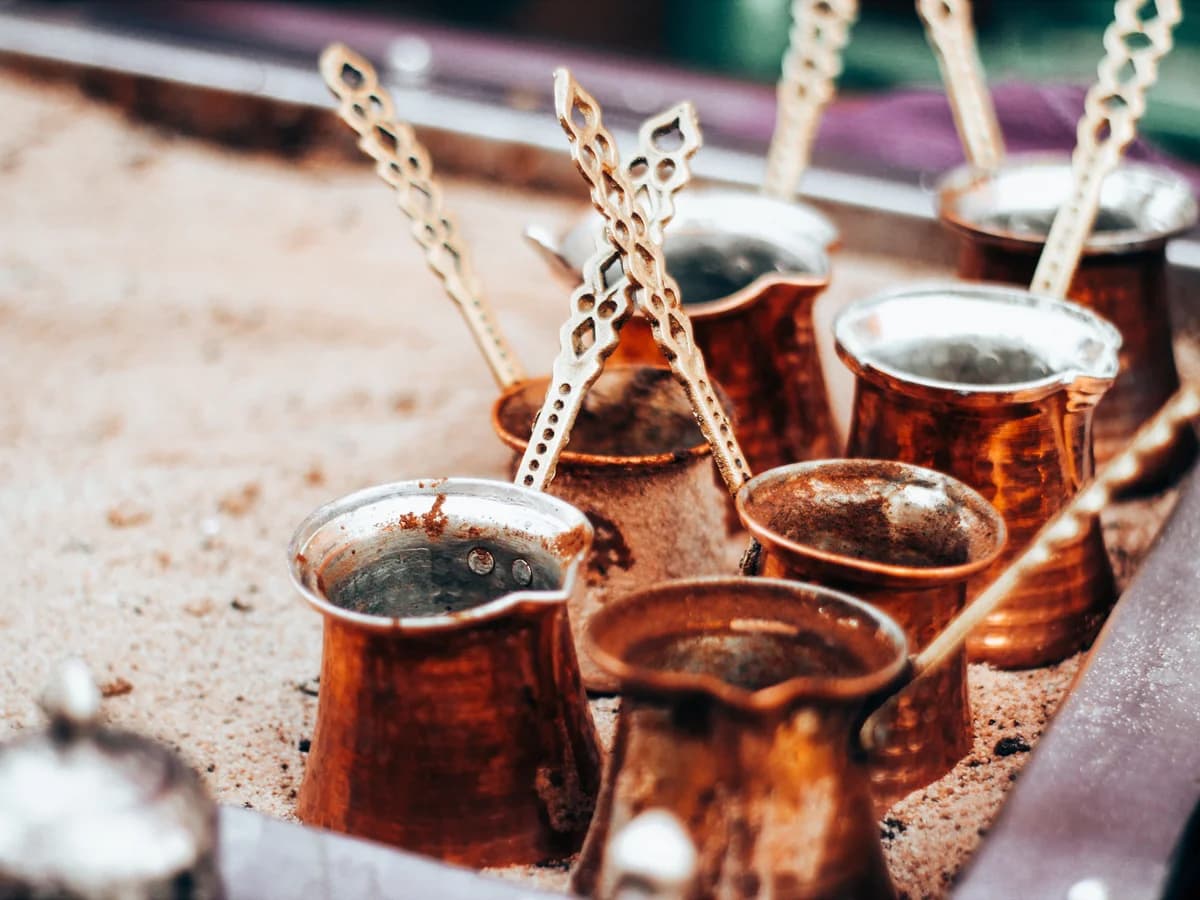
Brewing vessel
Cezve (ibrik)
A small, long-handled pot, typically copper or brass and often tin-lined, used to simmer very finely ground coffee and water together. The same vessel is called a cezve in Turkey, a briki in Greece and Cyprus, a džezva in Bosnia and Serbia, a jazve in Armenia, a jezve in Georgia, a rakwe in the Levant, a djezoua in Algeria, a zezoua in Tunisia and a turka in Russian; the narrow neck is the functional part, concentrating the rising foam so it can be watched and lifted off the heat at the right moment. The list is long because the Ottoman transmission was wide, and it is a list of names rather than of designs — what varies between them is proportion and local manufacture, not kind.
- Type
- Brewer
- What it is for
- Brewing vessel
- Brewing methods
- 1 method uses it
This page is a short reference entry. The full account of the subject is the Turkish cezve guide.
Brewing methods that use this
Where this equipment is part of the method rather than optional.
Coffee makers that need one
Devices whose profile records this equipment as required. Each links to setup, ratio, cleaning and running cost.
Drinks it appears in
Drinks that name this equipment, or that are brewed by a method requiring it.
Preparation traditions
Named regional traditions that use this vessel or filter, from CoffeeHQ's international preparation atlas.