History and culture
Turkish coffee culture and tradition
A method of preparing very finely ground, unfiltered coffee simmered in a small pot called a cezve, recognised by UNESCO as an element of intangible cultural heritage.
Each section below is labelled by how well-established its claims are — look for the label under each heading.
This page is a short reference entry. The full account of the subject is Turkish coffee culture and preparation.
Preparation and serving
Documented history · Turkey and the wider region
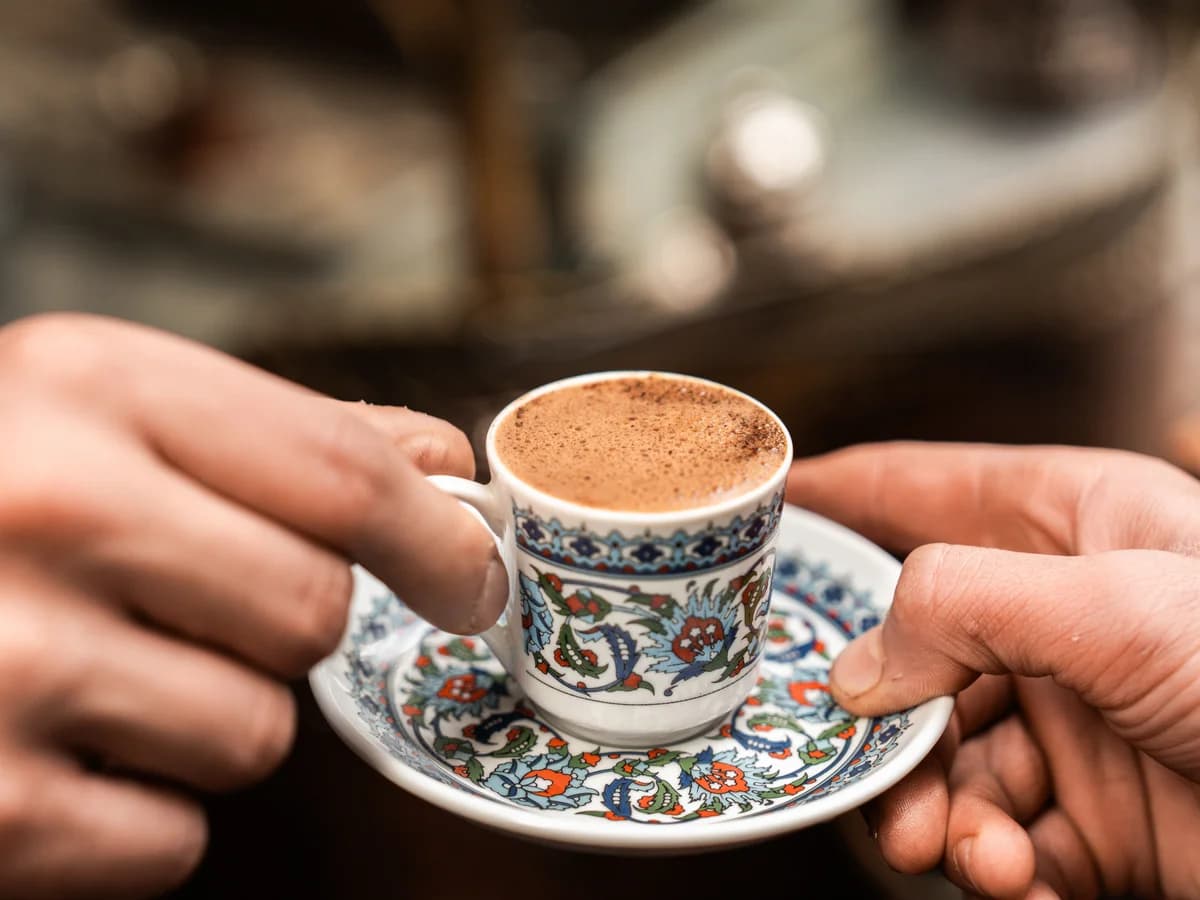
Turkish coffee is prepared by simmering very finely ground coffee, water and (often) sugar together in a small, long-handled pot called a cezve, without filtering, so fine grounds settle at the bottom of the cup during serving. It is traditionally served in small cups, often accompanied by a glass of water and a sweet.
Sources: Encyclopaedia Britannica coffee and coffeehouse history entries; The World Atlas of Coffee
Cultural heritage recognition
Documented history · 2013 inscription · Turkey
'Turkish coffee culture and tradition' was inscribed on UNESCO's Representative List of the Intangible Cultural Heritage of Humanity in 2013, recognising the social ritual surrounding its preparation and serving, not merely the brewing method itself.
Sources: Representative List of the Intangible Cultural Heritage of Humanity
Preparation traditions
How this history is practised today, in CoffeeHQ's international preparation atlas.
Where it was drunk
The institutions this history runs through, in CoffeeHQ's coffeehouse-history layer.
- The Ottoman coffeehouse (kahvehane) — The institution that invented the coffeehouse — a public room, open to men of any rank who could pay, where coffee was drunk, backgammon played, news exchanged and stories performed, and which the Ottoman state repeatedly tried to close.