Coffee maker
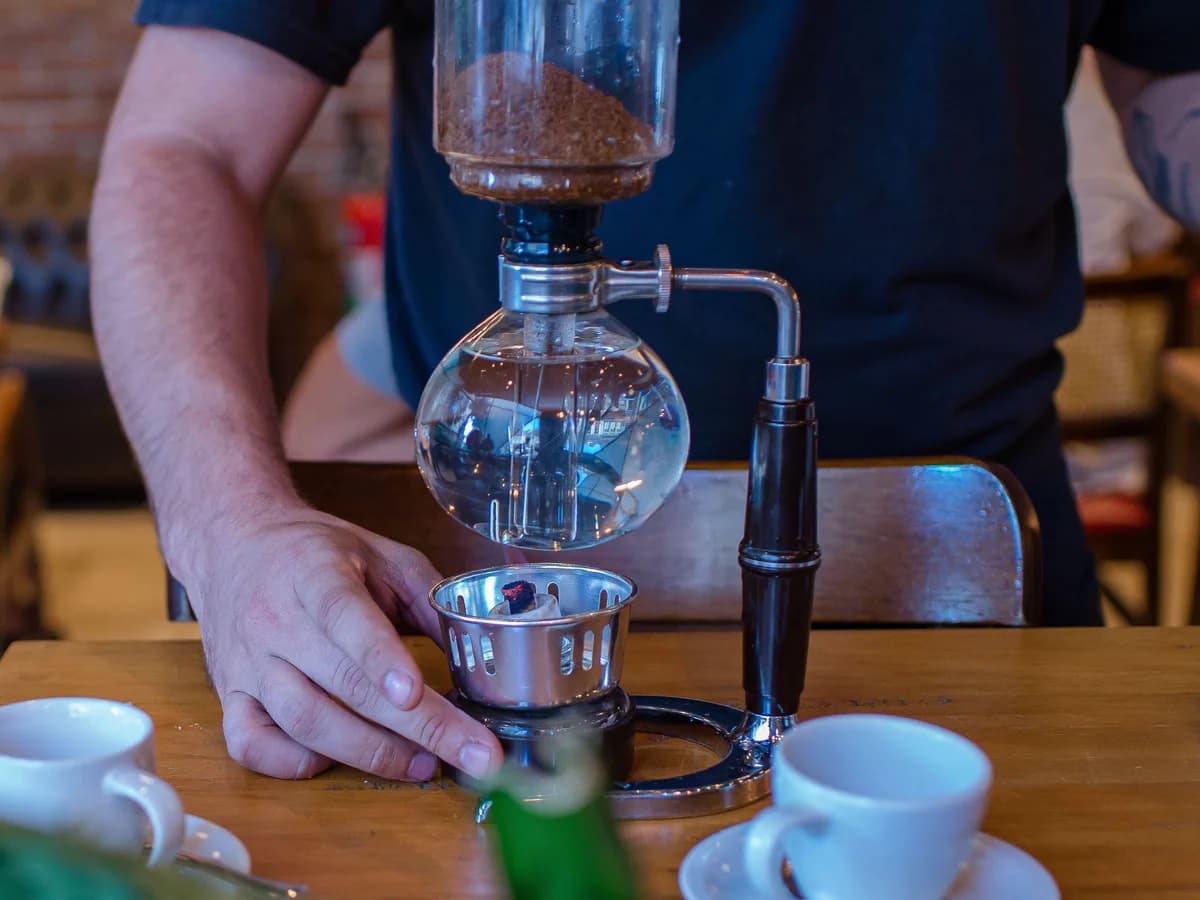
Siphon brewer
A brewer using vapour pressure to move water between two chambers through a coffee bed, valued as much for the visual brewing process as the cup.
In short
A siphon, or vacuum pot, is two glass chambers joined by a tube, with a filter between them and a heat source underneath. It makes a clean, aromatic cup and it is a piece of theatre. It is also the most fragile and fiddly brewer most people will ever consider.
Before buying one, it is worth being honest about how often you will set it up. The coffee is good; whether it is good enough to justify the routine is a personal call.
Tabletop or stovetop
Widely documented
- Tabletop with a stand
- The two chambers hang from a stand over a separate burner. This is the classic format and the one made for the table rather than the kitchen.
- Stovetop
- The lower chamber is a flat-bottomed vessel that sits on a hob. There is no burner to buy or refill, but the hob must be compatible with glass and may need a diffuser; the maker's instructions decide.
- Electric
- A powered base with its own element, sometimes with automatic control of the heat. It removes the open flame and much of the judgement.
Choosing a burner for a tabletop siphon
Tendency, not a guarantee
Tabletop siphons are often supplied with a small alcohol lamp. It works, but it is slow and its flame cannot be adjusted much, so many owners replace it. A refillable butane burner is hotter and adjustable. An electric halogen or infrared heater gives the steadiest, most controllable heat and is the usual choice in cafés that serve siphon coffee.
Whatever the source, starting with water that has already been heated in a kettle shortens the wait considerably and reduces the time the glass spends over a flame. Use only a heat source the maker lists for the brewer. With an alcohol lamp, never move it or top it up while it is lit, and put it out by covering it.
Cloth, paper or metal, and the upkeep each brings
Widely documented
The traditional filter is a disc of cloth tied over a metal frame, held in place by a spring and chain hooked to the bottom of the tube. Cloth gives a clean cup with some of the oils left in. It also needs care: rinse it thoroughly after each use, and either keep it submerged in clean water in the fridge or dry it completely, so it does not sour. It is replaced when it stains or slows.
Adapters exist for paper discs, which are thrown away after each brew and give the cleanest cup, and for metal filters, which need only rinsing and let the most through. If the cloth routine is the thing that would stop you using the brewer, choose one of those.
Handling hot glass safely
Widely documented
- Check the glass for cracks, chips and deep scratches before each use, and do not use a chamber that has one.
- Dry the outside of the lower chamber before heating. Water on the outside of hot glass is a common cause of cracks.
- Never heat the lower chamber empty. Once the water has risen it is nearly empty, so keep the heat low and brief at that stage.
- Keep hands and face away from the lower chamber while it heats. Water can boil suddenly and spurt.
- Seat the upper chamber gently and do not force it; the rubber seal should hold it without pressure on the glass.
- When the coffee has drawn down, hold the brewer by its handle and ease the upper chamber out by rocking it gently back and forth, not by pulling or twisting. Stand it in its holder. Both chambers and the stand are hot, so use a cloth or a glove on anything but the handle.
- Keep hot glass away from anything cold or wet. Do not wipe it with a damp cloth, stand it on a wet surface or rinse it until it has cooled.
Replacement chambers and seals are sold for common models. Check that spares are available for the one you choose, because the upper chamber is the part most often broken.
Simpler ways to a similar cup
CoffeeHQ explanation
- Pour-over dripper — A similarly clean, aromatic cup from equipment that costs little, cannot shatter and is rinsed in seconds.
- AeroPress — Full-immersion brewing through paper, as in a siphon, without heat sources, glass or any real cleaning.
What to do next
- How to brew with a siphon — The cycle step by step, with timing, stirring and the draw-down.
- Siphon vs pour-over — What the extra effort does and does not change in the cup.
- Cloth coffee filters — More on how cloth filters behave and how to look after them.
- Become a barista — A structured programme from dose and grind through milk, drinks and maintenance.
How it works
Water in a lower chamber is heated until vapour pressure pushes it up into an upper chamber containing coffee grounds; once heat is removed, the brewed coffee is drawn back down through a filter as the lower chamber cools.
Who it suits
- users interested in a visually engaging, ritual brewing process
- users wanting a clean cup with full-immersion contact
Who it may not suit
- users wanting a fast or low-maintenance brew
- users on a tight budget or with limited counter space
- Starting dose
- 20g
- Starting water
- 300ml
- Coffee-to-water ratio
- 55–70 g per litre (typically 65)
- Grind
- Medium-coarse.
- Capacity
- 2-4 cups
- Brew time
- 3-5 min
- Skill level
- advanced
- Noise
- quiet
- Space
- medium
- Cleaning burden
- high
- Convenience
- low
- Manual control
- high
Descriptive grind labels like this are illustrative starting points, not precise measurements — the same label can mean different particle sizes on different grinders. See the grind size guide for how to dial this in on your own equipment.
Uses the Siphon (vacuum) brewing brewing method.
Equipment
Requires a separate grinder.
Advantages
- visually engaging brewing process
- full-immersion contact with filtered clarity
Disadvantages
- fragile glass components
- requires practice to time correctly
- slower and more hands-on than most filter methods
Steps
- Fill the lower chamber with water and attach the filter to the upper chamber.
- Apply heat until vapour pressure pushes the water up into the upper chamber.
- Add ground coffee to the upper chamber and stir gently, timing the steep.
- Remove from heat; the brewed coffee is drawn back down through the filter as it cools.
Cleaning & maintenance
Disassemble and rinse all glass chambers and the cloth or metal filter after each use, handling the glass as its maker directs: hot glass and a sudden change of temperature do not mix.
Cloth filters need periodic replacement; glass chambers are fragile and should be handled carefully.
Consumables: cloth or paper filters (system-dependent)
Common faults
- uneven extraction from inconsistent agitation
- seal failure between chambers if not assembled correctly
Cost
Purchase cost band: mid rangeGlass siphon sets are typically priced above basic pour-over drippers.
Ongoing cost is beans and periodic filter replacement.
Suitable roast levels
Not sure if this is right for you? Try the coffee-maker selector.