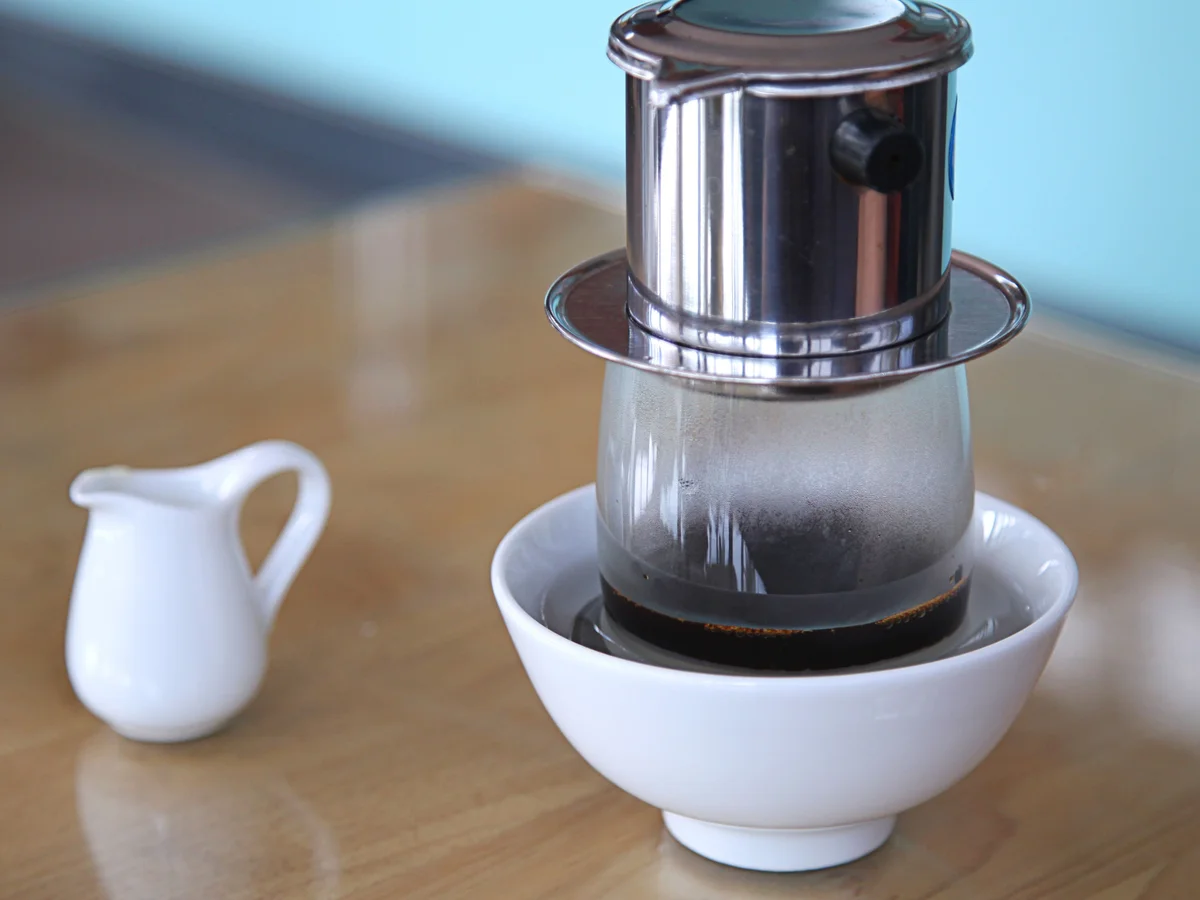
Coffee maker
Vietnamese phin filter
A small metal drip filter that sits atop a cup, slowly drip-brewing strong coffee in the traditional Vietnamese method.
In short
A phin is a small metal filter that sits on top of a glass. Coffee goes in the chamber, a perforated insert rests on top of it, hot water is poured over, and the brew drips through slowly, one cup at a time. It uses no paper and has nothing to wear out.
It is one of the cheapest ways to make coffee and one of the slowest. The few choices to make are the size, the type of insert and the metal.
The four pieces, from the glass upwards
Widely documented
Plate
A perforated saucer that sits on the rim of the glass and supports the chamber. On some designs it is fixed to the chamber.
Chamber
A small cup with fine holes in its base. This holds the ground coffee and the water.
Insert
A perforated disc that sits on the coffee. It keeps the bed level and stops grounds floating up when water is poured in.
Lid
Keeps the heat in while the coffee drips. Turned upside down, it is the tray the filter rests on afterwards.
The parts in the order they stack. The holes are fixed in size, so how fast the coffee drips is controlled by the grind and by how firmly the insert sits.
Gravity insert or screw-down
Tendency, not a guarantee
- Gravity insert
- The disc simply rests on the coffee under its own weight. It is quick to use and consistent, since there is no setting to get wrong. This is the commoner type.
- Screw-down insert
- The disc threads onto a post in the chamber and can be tightened to compress the coffee. That gives control over drip speed, and a way to choke the filter completely if overdone.
Size and metal
Widely documented
Phins are sold by capacity, from single small servings up to sizes meant for sharing. The traditional drink is short and strong, served over sweetened condensed milk or ice, so a small phin is the usual choice. A larger one makes a longer black coffee or two small servings.
Stainless steel is durable and does not dent easily; one maker describes its steel phin as dishwasher safe, and yours may differ. Aluminium is lighter and cheaper and is the traditional material in many households; it marks more readily and is better washed by hand. The metal has little effect on the coffee compared with the grind.
What it needs to work well
CoffeeHQ explanation
The holes in the base are small but not fine enough to stop powder. A grind that is too fine clogs them and also falls through into the cup; one that is too coarse lets the water race through. Advice on where to start differs. One maker of phin filters recommends a grind between pour-over and espresso, about where a moka pot sits; many other descriptions say medium-coarse. The holes are not the same size from one phin to another, so the drip is the better guide: that maker suggests the first drop should fall within about two minutes and the last at around five or six. Faster than that, grind finer; much slower, grind coarser.
The same maker points to two causes of a stalled filter that have nothing to do with the grind. A phin that is still wet from washing can have water sitting in its holes, so dry it before use. And very fresh coffee gives off gas that can hold the water up; wetting the grounds and waiting most of a minute before filling lets it escape.
A heatproof glass lets you watch the drip and see when it has finished. Preheating the phin and the glass with hot water helps, because a small metal brewer loses heat quickly over a brew that takes several minutes.
If it will not drip properly
CoffeeHQ explanation
- Nothing comes through, or only an occasional drop
Usually because: The grind is too fine, or a screw-down insert has been tightened too far.
Change first: Loosen the insert first; if that does not help, grind coarser next time.
- It is finished in a minute or two and tastes thin
Usually because: The grind is too coarse, so the water is not held in contact with the coffee.
Change first: Grind a little finer.
- Gritty sediment in the glass
Usually because: Fine particles are passing through the base holes.
Change first: Grind slightly coarser and avoid stirring the bed once water is in.
- Grounds float and the bed is uneven
Usually because: Water was poured in fast before the coffee had been wetted.
Change first: Add a small amount of water first, wait about half a minute, then fill.
What to do next
- How to brew with a phin — The method in full, including the bloom and the usual proportions.
- Vietnamese cà phê phin — The tradition the filter belongs to, and how the drink is served.
- Grind size guide — Where a phin grind sits relative to other brewing methods.
- Become a barista — A structured programme from dose and grind through milk, drinks and maintenance.
How it works
Coarse-to-medium ground coffee sits in a small metal chamber with a perforated press disc on top; hot water poured in slowly drips through under gravity into the cup below, often over condensed milk.
Who it suits
- users wanting an inexpensive, portable, traditional single-serve brewer
- users who enjoy strong coffee with condensed milk
Who it may not suit
- users wanting a fast brew
- users brewing for several people at once
- Starting dose
- 18g
- Starting water
- 100ml
- Coffee-to-water ratio
- 150–200 g per litre (typically 180)
- Grind
- Medium-fine to medium-coarse, depending on the size of the filter's holes; judge it by how long the drip takes.
- Capacity
- 1 cup
- Brew time
- 4-6 min
- Skill level
- beginner
- Noise
- quiet
- Space
- compact
- Cleaning burden
- low
- Convenience
- medium
- Manual control
- medium
Descriptive grind labels like this are illustrative starting points, not precise measurements — the same label can mean different particle sizes on different grinders. See the grind size guide for how to dial this in on your own equipment.
Uses the Vietnamese phin brewing brewing method.
Equipment
Requires a separate grinder.
Advantages
- low cost, no electricity needed
- compact and portable
- well suited to traditional condensed-milk serving style
Disadvantages
- single serving only
- slow relative to automatic methods
Steps
- Add condensed milk to the serving glass or cup, if using.
- Set the phin chamber on top, add ground coffee, and gently level it.
- Place the press disc on top and pour a small amount of water to bloom.
- Fill with the remaining water and let it slowly drip through, then stir before drinking.
Cleaning & maintenance
Take the pieces apart and rinse them after use, checking that the holes in the base and the press are clear. Dry the phin before it is used again.
Minimal — inspect the press disc and chamber for wear.
Common faults
- drips too fast and tastes weak
- drips too slowly or stalls
Cost
Purchase cost band: budgetWidely and inexpensively available.
No filters or pods needed — ongoing cost is beans and, traditionally, condensed milk.
Suitable roast levels
Not sure if this is right for you? Try the coffee-maker selector.