History and culture
Japanese coffee culture
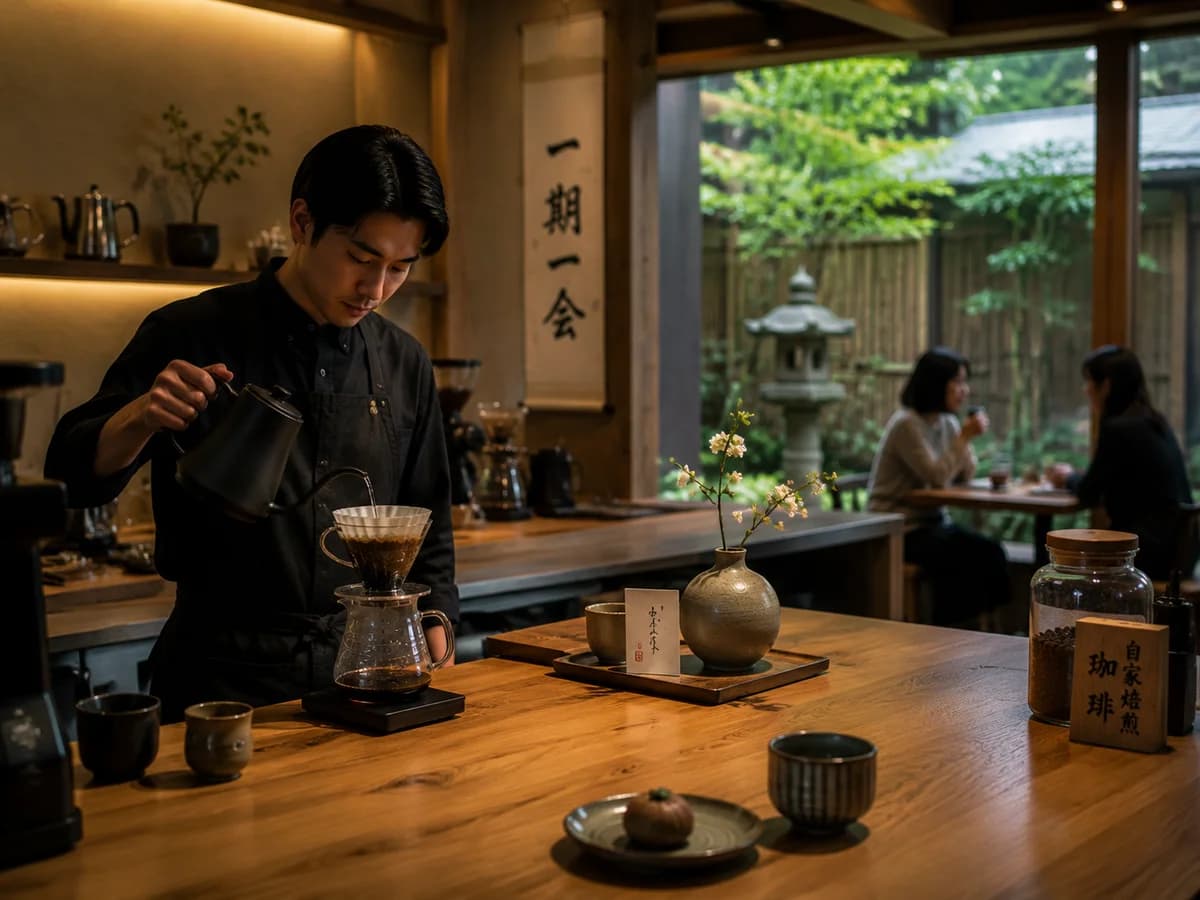
Japan developed a distinctive kissaten café tradition built around careful, slow manual brewing, alongside becoming a major early market for canned and vending-machine coffee.
Each section below is labelled by how well-established its claims are — look for the label under each heading.
This page is a short reference entry. The full account of the subject is Japanese nel drip in the preparation atlas.
Kissaten and manual brewing
Documented history · Japan
Kissaten (traditional Japanese cafés) are documented as having developed a strong culture of careful, unhurried manual brewing — including pour-over and siphon methods — with an emphasis on precision and ritual, distinct from faster café service models elsewhere.
Sources: Encyclopaedia Britannica coffee and coffeehouse history entries; The World Atlas of Coffee
Canned and vending-machine coffee
Documented history · Japan
Japan is documented as an early and major market for canned coffee and coffee sold through vending machines, a mass-market, convenience-driven tradition that developed alongside, rather than replacing, kissaten café culture's slower, manual-brewing tradition.
Sources: Encyclopaedia Britannica coffee and coffeehouse history entries; The World Atlas of Coffee
Related
How to order this abroad
Preparation traditions
How this history is practised today, in CoffeeHQ's international preparation atlas.