History and culture
Vietnamese coffee culture
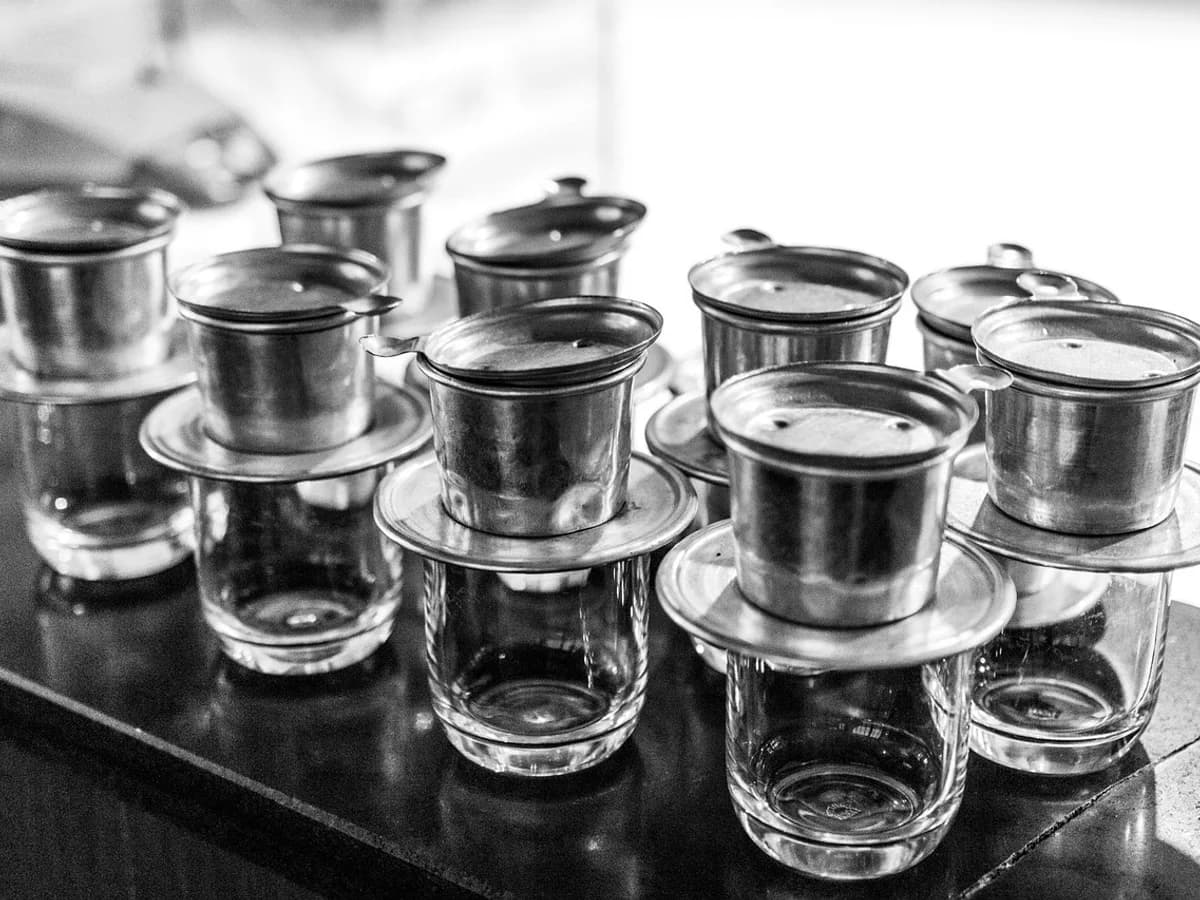
Coffee cultivation introduced during the French colonial period grew into a major robusta industry, alongside a distinctive phin-filter brewing tradition often served with sweetened condensed milk.
Each section below is labelled by how well-established its claims are — look for the label under each heading.
This page is a short reference entry. The full account of the subject is Vietnamese phin coffee, including cà phê sữa đá.
Colonial-era introduction and robusta production
Documented history · Vietnam
Coffee cultivation was introduced to Vietnam during the period of French colonial rule in the 19th century. Vietnam subsequently developed into one of the world's largest coffee producers, with production dominated by robusta rather than arabica, reflecting the country's growing conditions.
Sources: Encyclopaedia Britannica coffee and coffeehouse history entries; The World Atlas of Coffee
Phin filter and condensed milk
Documented history · Vietnam
A small metal drip filter called a phin is documented as the traditional brewing device in Vietnam, producing a strong, slow-dripped coffee. Sweetened condensed milk is commonly used instead of fresh dairy milk, an adaptation often attributed to the historical difficulty of keeping fresh milk in the region, served hot (cà phê sữa nóng) or over ice (cà phê sữa đá).
Sources: Encyclopaedia Britannica coffee and coffeehouse history entries; The World Atlas of Coffee
Sidewalk café culture
Documented history · Vietnam
Low plastic stools and tables set up on or near the pavement (cà phê vỉa hè) are a widely documented, distinctive feature of everyday Vietnamese café culture, especially in cities such as Hanoi and Ho Chi Minh City — a genuinely different social space and pace from a seated indoor café, and a real part of daily social life rather than a tourist-facing novelty.
Egg coffee
Documented history · Hanoi, Vietnam
Vietnamese egg coffee (cà phê trứng), whipped egg yolk and sugar poured over phin-brewed coffee, is documented as a Hanoi speciality that developed during a period of fresh-milk scarcity — using egg as a dairy substitute in the topping rather than as a novelty flavour (see CoffeeHQ's Vietnamese egg coffee drink profile for the recipe itself).
Related
Preparation traditions
How this history is practised today, in CoffeeHQ's international preparation atlas.