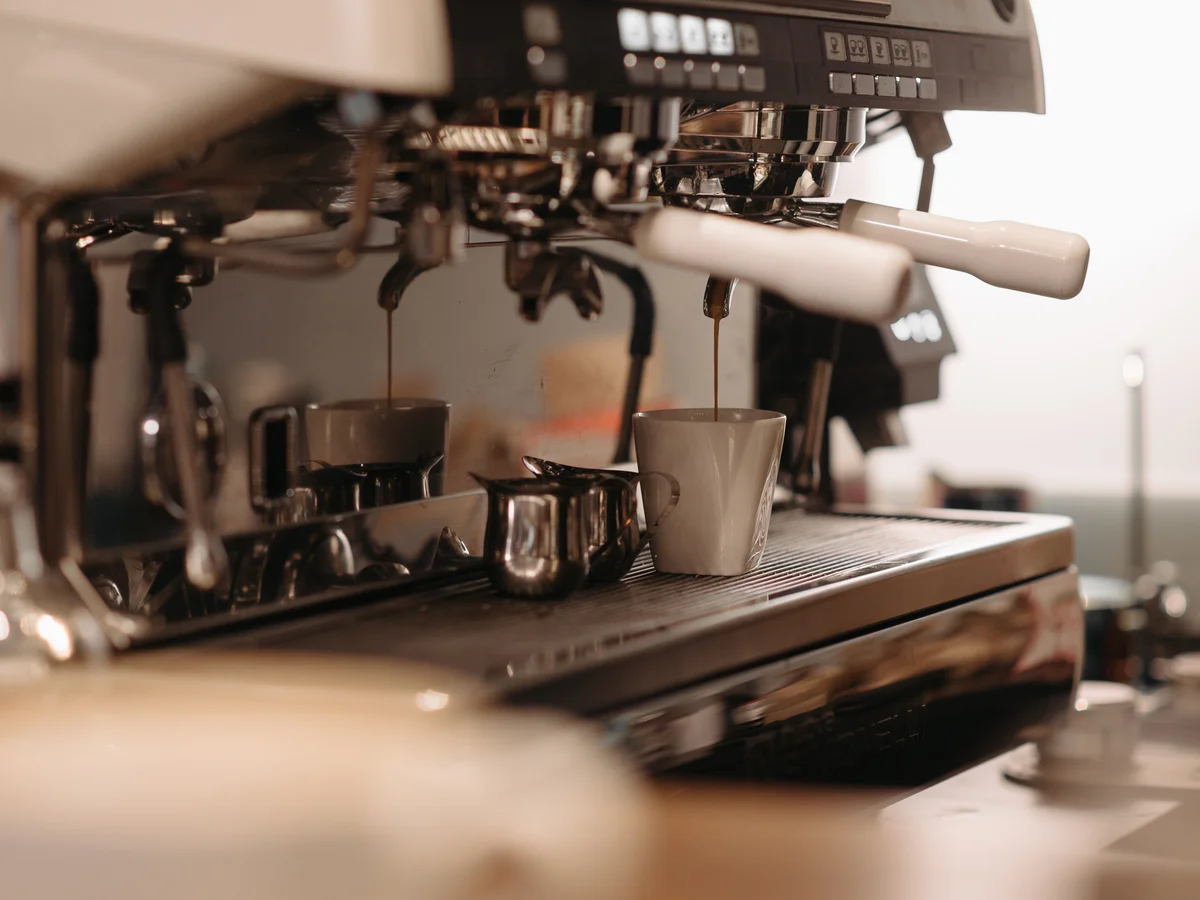
Brewing vessel
Espresso machine
Uses a pump or lever to force hot water through finely-ground, tamped coffee under pressure to produce espresso.
- Type
- Brewer
- What it is for
- Brewing vessel
- Brewing methods
- 1 method uses it
In short
An espresso machine heats water and pushes it through a compact bed of finely ground coffee at high pressure. That description fits a lever machine worked by hand and a one-touch machine that grinds, brews and froths milk without being touched. The words on the box say little; what matters is which jobs the machine does and which it leaves to you.
Sort machines by that question and they fall into four kinds. Each has its own page here with the detail. This page is for telling them apart.
Four kinds, sorted by who does the work
Widely documented
- Manual lever — You create the pressure yourself with a lever, as well as grinding, dosing and tamping. The most involved and the most direct, with nothing electronic between you and the shot.
- Semi-automatic — A pump makes the pressure. You grind, dose, tamp and decide when to stop the shot. This is the kind most home enthusiasts and most cafés use, and it needs a separate grinder.
- Bean-to-cup — Grinds, doses, tamps and brews inside the machine at the press of a button, often with automatic milk as well. Convenience first, with limited room to adjust.
- Pod or capsule — Brews from a sealed, pre-dosed capsule. Nothing to grind or measure, a narrow choice of coffee, and a higher cost per cup.
Working out which kind you are looking at
CoffeeHQ explanation
- Is there a portafilter?. A detachable handle with a metal basket that locks into the front means a manual or semi-automatic machine. If coffee goes in as beans at the top or as a capsule, it is one of the automatic kinds.
- Is there a grinder built in?. A bean hopper on a machine with a portafilter means a semi-automatic with an integrated grinder. A hopper and no portafilter means bean-to-cup.
- What stops the shot?. If you stop it, the machine is semi-automatic. If it stops itself at a programmed volume, it is often sold as automatic, though you still do the grinding and tamping.
- What does the basket look like?. A basket with one small exit hole underneath is pressurised, which is common on entry-level machines and changes how much the grind matters.
Sellers use these words loosely, and automatic in particular is applied to machines at both ends of the range. Check what the machine does, not what it is called.
What the price of the machine leaves out
CoffeeHQ explanation
A machine with a portafilter cannot make espresso on its own. It needs a grinder capable of grinding finely and adjusting in small steps, and that grinder matters at least as much to the result as the machine does. A capable machine paired with a poor grinder makes poor espresso; the reverse pairing usually does better.
Beyond the grinder there is a tamper, a scale accurate to a fraction of a gram, a milk jug if you steam milk, and cleaning supplies. None is expensive individually. Together with the grinder they are a real part of the cost, and the reason a bean-to-cup or capsule machine can be the more sensible purchase for someone who wants the drink and not the hobby.
What separates one machine from another
Tendency, not a guarantee
Among machines of the same kind, the differences that affect daily use are mostly about heat. A machine with one boiler brews and steams at different temperatures and makes you wait between the two. Machines with a heat exchanger or two boilers can do both at once. Electronic temperature control keeps the brew water steadier from shot to shot.
Steam power decides how easily milk can be textured. Warm-up time decides whether the machine suits a rushed morning. These features differ machine by machine and cannot be assumed from the category, which is why each is something to check in the specification of the model in front of you.
Common misunderstandings when buying
CoffeeHQ explanation
- Expecting a higher pump pressure figure to mean better espresso
Usually because: Espresso is conventionally brewed at around nine bar. A larger number on the box describes what the pump can reach, not the pressure at the coffee.
Change first: Ignore the headline pressure figure when comparing machines.
- Assuming thick crema proves a good shot
Usually because: Pressurised baskets and capsules make foam mechanically, whatever the coffee underneath tastes like.
Change first: Judge by taste; treat crema as a clue at most.
- Planning to use pre-ground coffee in a standard basket
Usually because: A standard basket relies on a grind matched to the machine, and pre-ground coffee cannot be adjusted.
Change first: Budget for a grinder, or choose a machine built around a pressurised basket.
What to do next
- What your espresso machine can actually do — How to find out which features a particular machine has, and why they matter.
- Coffee-maker selector — A guided way to narrow the four kinds down to the one that fits how you drink coffee.
- Choosing a grinder — The purchase that matters as much as the machine if it has a portafilter.
- How to pull a shot — The brewing itself: dose, yield, time and how to dial in.
- Become a barista — A structured programme from dose and grind through milk, drinks and maintenance.
Brewing methods that use this
Where this equipment is part of the method rather than optional.
Coffee makers that need one
Devices whose profile records this equipment as required. Each links to setup, ratio, cleaning and running cost.
Often used alongside
Other equipment this one is used with, or that the same brewing methods call for.
Drinks it appears in
Drinks that name this equipment, or that are brewed by a method requiring it.
Preparation traditions
Named regional traditions that use this vessel or filter, from CoffeeHQ's international preparation atlas.
Where this is taught
Become a Barista · Level 2
What the machine does, what the puck does, and how to read a shot as it runs.