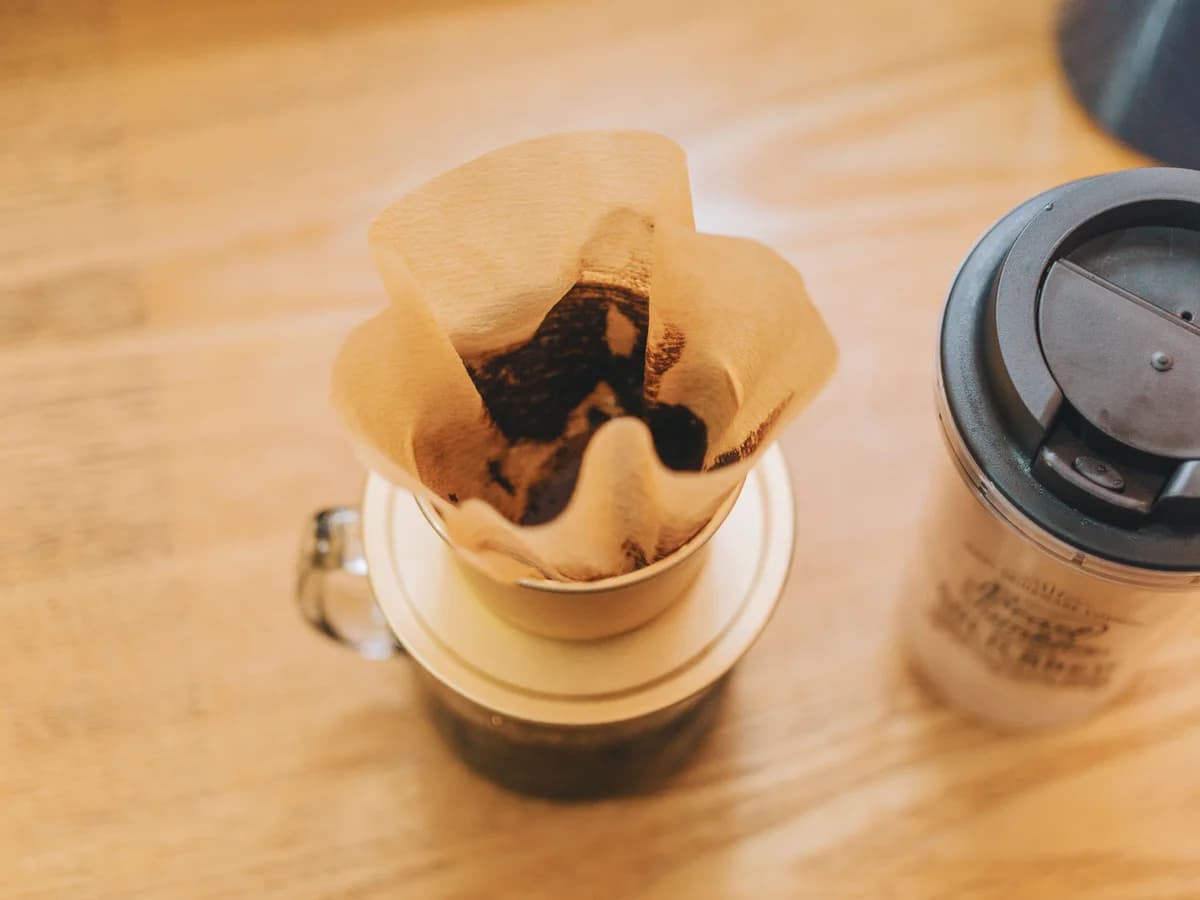
Filtration
Paper filter
A disposable paper filter that removes coffee oils and fine particles, producing a cleaner cup than metal filtration.
- Type
- Filter
- What it is for
- Filtration
- Who needs one
- Essential
- Consumable or kept
- Used up and replaced
- Materials
- Bleached cellulose, Unbleached cellulose
- Needs attention
- Single use.
- Brewing methods
- 2 methods use it
Work out whether it is for you
Paper, cloth or metal: which filter suits you?
CoffeeHQ explanatory model — not a measurement
What do you want in the cup?
Clear and light, with flavours easy to tell apart — Paper. It holds back oils and fine particles, which is what makes a cup clear.
Heavy and rich, and I do not mind some sediment — Metal. Oils and fines pass through, giving weight and a cloudier cup. Nothing to buy again.
Body without the silt
Will you rinse and store a filter properly after every brew?
Yes, I brew daily and would make it a habit — Cloth. It passes more oil than paper and stops particles as paper does.
Probably not — Paper, with a slightly finer grind or longer brew for more body. A neglected cloth filter tastes rancid.
Basis: Reasoned from what each material lets through: paper absorbs oil and traps fines, metal passes both, cloth sits between. Limits: A tendency for the same coffee and recipe. The coffee, the grind and the brewer can outweigh the filter.
What it is
Paper is the most selective filtration in ordinary coffee brewing: its pores are small enough to hold back both fine particles and a large proportion of the coffee's oils. That is what produces the clarity pour-over is chosen for. It also means paper is doing something to the coffee, not merely holding the grounds — a fact worth knowing before switching to metal and wondering what changed.
How it works
A dense cellulose web traps particles and adsorbs oils as the brew passes through. Thickness, pore structure and how the paper sits in the dripper all affect flow resistance, which is why filters are not interchangeable between brewers even when they look similar.
Why people use one
Clarity, no sediment, and nothing to wash.
Where it fits
How much each kind of filter holds back
CoffeeHQ explanatory model — not a measurement
From most held back (first) to least held back (last).
- Thick paperHolds back the most oil and nearly all fine particles. The clearest, lightest cup.Chemex-style brewers
- Standard paperAbsorbs most oils and traps fines. Clean, with a little more texture.Cone and flat-bottomed drippers, filter machines, AeroPress
- ClothStops particles much as paper does and lets more oil through. Rounded, without silt.Nel drip, sock filters, siphons
- Metal meshPasses oils and the finest particles. Heavy, slightly cloudy, with sediment.French press, reusable cone and disc filters, phin
- No filterEverything stays in the liquid and the grounds settle in the cup or pot.Turkish coffee, cowboy coffee, cupping
Basis: Reasoned from what each material physically allows through. Limits: A tendency for the same coffee and recipe. Paper thickness, weave and mesh size vary by maker, and the rungs overlap in practice.
What this actually changes
Separated by what it affects, because “improves your coffee” is not something you can act on. Where the evidence is thin or contested, it says so.
Taste
Real differenceReasoned, not measuredPaper holds back coffee oils and fine particles, which has been measured; drinkers describe the result as a cleaner, lighter cup with no sediment. No tasting study of paper against metal was read.
Workflow
Modest differenceReasoned, not measuredThe spent bed lifts out in one piece. In exchange it is an ongoing purchase and a waste stream.
Who it is for
Worth having if
- Anyone brewing pour-over, drip or AeroPress with a paper filter
Probably skip it if
- Anyone using a metal or cloth filter by preference
- Anyone brewing French press or cold brew
Choosing one
What actually differs between them. No products, no rankings.
- Fit
- Filters are shaped for specific drippers. A cone filter in a flat-bottomed brewer channels water down the side and bypasses the bed.
- Thickness
- Thicker papers flow more slowly, which changes contact time and may need a coarser grind. Chemex papers are the well-known example.
- Bleached or unbleached
- Unbleached papers are more likely to contribute a papery taste unless rinsed, which is a good reason to rinse either kind. Beyond that the practical difference for the cup is small.
Common mistakes
Not rinsing the filter
A papery taste in the cup, and a cold brewer.
Instead: Rinse with hot water before brewing; it preheats the brewer at the same time.
Using a filter shaped for a different brewer
Water runs down the gap instead of through the coffee.
Instead: Match the filter to the dripper.
Cleaning and care
None. Compost or dispose of with the grounds.
What you could use instead
Reusable, heavier body, some sediment.
Between the two, and needs proper storage between uses.
How to use it
Step-by-step techniques this equipment is part of.
- Rinsing a paper filterRemove papery taste, seat the filter against the brewer, and preheat the equipment in one action.
- Blooming coffeeWet the whole coffee bed and let it release its carbon dioxide before the main pour begins.
- Preheating a brewerStop cold equipment taking heat out of the brew before it has finished extracting.
- Dialling in filter coffeeFind the grind and ratio that suit a particular coffee in a particular brewer, using brew time as a reading and never as a target.
- Pulse pouringControl agitation and contact time by pouring in several stages rather than one continuous stream.
When it goes wrong
Brewing methods that use this
Where this equipment is part of the method rather than optional.
Coffee makers that need one
Devices whose profile records this equipment as required. Each links to setup, ratio, cleaning and running cost.
The science behind it
- Clarity
How distinctly you can pick out individual characteristics, rather than a general coffee flavour.
Often used alongside
Other equipment this one is used with, or that the same brewing methods call for.
Drinks it appears in
Drinks that name this equipment, or that are brewed by a method requiring it.
Compare the options
Side-by-side comparisons this category appears in.
Tools that use this
Background reading
Where this is taught
Become a Coffee Expert · Level 8
Solubility, concentration and extraction yield — and how each brewing mechanism moves them.